The Court Watch: A Small Timing Ritual for a Racquet Weekend
A well-planned racquet weekend does not need a rigid timetable. It needs a few visible moments that let court time, arrivals and the table move easily together.
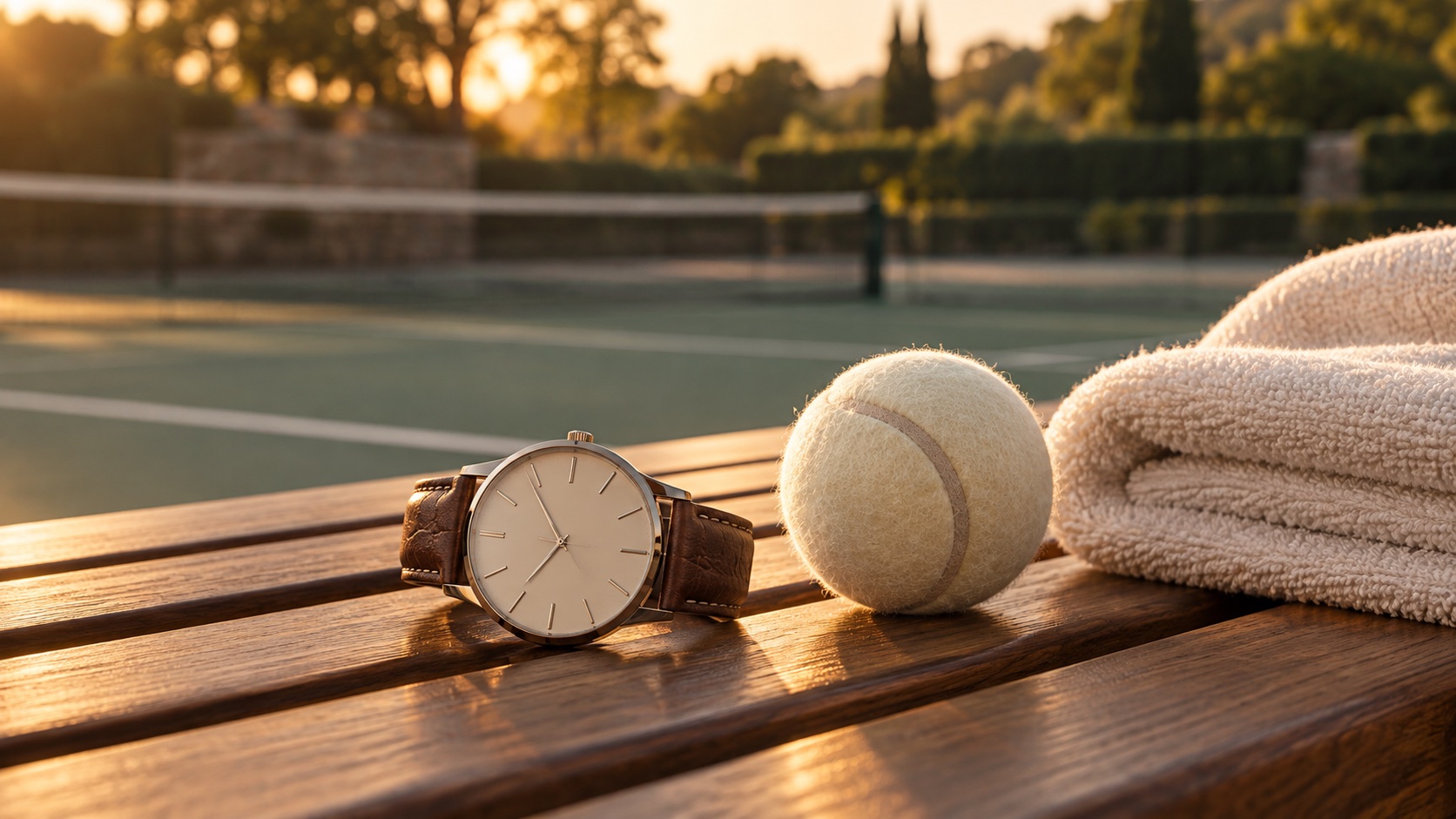
The most useful object on a racquet weekend may be the one that never asks for attention: a simple watch, a clock on a table, or a shared sense of when the next moment begins. Its job is not to squeeze the day into a program. It is to give the people around the court enough confidence to let the afternoon breathe.
This is an original CourtCore style guide. It does not review, recommend or compare a particular product.
Set three moments, then leave space around them
A court day usually needs only three anchors: when people arrive, when play begins, and when everyone gathers afterward. Put those moments in the invitation or group message. Everything else can remain flexible: a late coffee, a second set, a longer conversation at the gate.
That small structure is particularly useful when guests have different relationships to the game. The person playing a full match needs clarity about the start; the person joining later needs clarity about where to find everyone. Neither needs a minute-by-minute plan.
Keep the watch practical, not performative
For a court setting, the best visual choices tend to be quiet: a readable face, a comfortable strap and enough restraint that the object belongs beside a linen shirt or a racquet bag without becoming the subject of the afternoon. It can be personal without being a presentation.
Leave it off the court when play begins if it distracts from movement or feels exposed. Use it at the transitions instead: the walk from room to court, the point when a host checks whether lunch needs another ten minutes, or the easy decision to call the final game before the light changes.
Let the last match have an end
One of the most generous things a host can do is name an approximate close. It lets a guest decide whether to stay for a final drink, change clothes, make a call or leave without inventing an excuse. A watch makes that boundary feel natural rather than abrupt.
Afterward, place it back in the room or bag and let the table take over. Court time has done its work when it gives the rest of the weekend a shared rhythm—not when it fills every available hour.
For a complementary hosting approach, see CourtCore’s guide to hosting a tennis morning that leaves time to talk.
Editorial note: This is original lifestyle guidance. The accompanying visual is a CourtCore conceptual editorial image; it does not depict a product, property or event.